Vatnajökull aircraft secrecy order
Operation NapoleonThe Vatnajökull aircraft secrecy order is the U.S. military’s sustained effort to keep a long-monitored German aircraft, its recovery, and its contents from public view. It is not presented as a single written directive so much as a protocol enacted through secrecy, restricted information, cover stories, and pressure on those who might expose the operation. As the wreck begins to emerge from Vatnajökull Glacier, the order’s purpose shifts from preventing discovery to controlling what Icelandic officials, military personnel, and the public are told about it.
Origins and Strategic Purpose
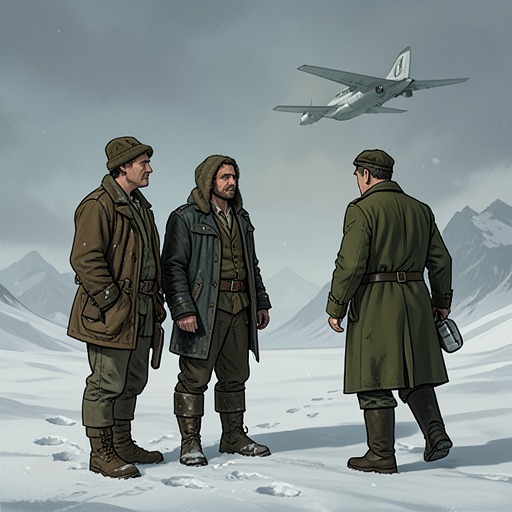
The secrecy effort begins with surveillance rather than excavation. The United States has monitored the glacier for years, watching for signs that the aircraft is reappearing in the ice. Carr explains that the military’s main concern has been to check that it remains hidden; it has been reluctant to search systematically or dig for it while the glacier still conceals it. A wheel recovered from the ice has helped establish the aircraft’s size and type, and new imagery suggests that the long-hidden wreck is now close to being found. In Carr’s view, concealment had been preferable to recovery: the glacier was serving as a natural barrier around something the military did not want exposed.
The operation is set against a politically delicate military presence in Iceland. The U.S. Army’s base at Keflavík was established after World War II, and the defense treaty signed in 1949 provoked a riot outside the Icelandic parliament. Opposition to the base persisted, even as Icelandic policy maintained that the country should not profit from NATO’s presence. In practice, contractors, service companies, and neighbouring communities benefited from military activity, making the relationship both politically contentious and economically entangled. Carr knows that moving special forces, equipment, and a C-17 to the glacier cannot be treated as an ordinary deployment without attracting attention. He is instructed to call the mission a routine exercise, direct uncooperative locals to the defense secretary, and proceed covertly; Immanuel Wesson is to serve as spokesman at the embassy in Reykjavík.
Secrecy, Surveillance, and Cover Stories
The military’s long presence on the glacier has depended on controlling what local people understand about its activity. Jón recalls that the brothers who guided the army had been told by Colonel Miller to describe the expeditions as training exercises if neighbours asked questions. They kept their promise not to disclose the expeditions’ true purpose. The Americans returned in force when surveillance suggested that wreckage was emerging, and military monitoring continued from space after patrols of the area ceased. The brothers privately speculated about what the aircraft might contain, imagining Jewish gold, diamonds, stolen art, a senior German officer, or a secret weapon. Those guesses show how effectively the purpose had been withheld: even people repeatedly guiding the expeditions were left to conjecture.
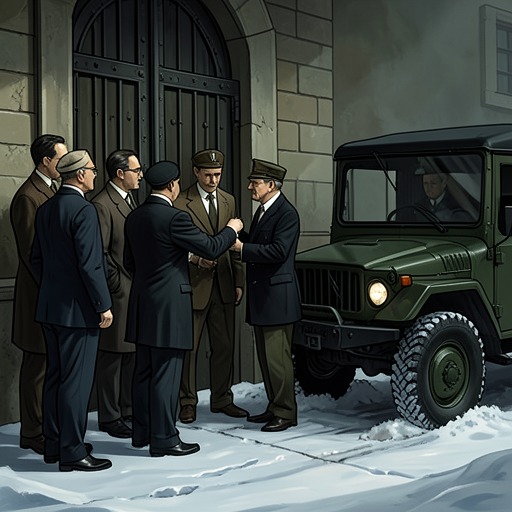
The cover story becomes more formal when the U.S. representatives meet the Icelandic government. They stress that the meeting itself must remain secret and explain that military intelligence has detected the aircraft in satellite images. The stated plan is to excavate it, move it to Keflavík, and eventually return it to the United States. The general describes the expedition as scientific and promises inconspicuous travel, while acknowledging that military personnel and equipment will cross Icelandic territory. The Icelandic foreign minister points out that the government’s permission is required. When the Americans refuse to explain why the plane matters, the general abruptly insists that the matter is not Iceland’s concern. The admiral, by contrast, argues that consistent answers from both sides are essential and that the aircraft’s very existence must be kept secret.
This secrecy is therefore not limited to withholding the cargo’s identity. It extends to the existence of the aircraft, the purpose of the expedition, and the public account of military movements. The Americans ask Icelandic officials to trust them while withholding the information that would allow those officials to judge the risk. Their explanation also shifts according to the audience: the public-facing account is a routine or scientific exercise, while the private instructions make clear that concealment is central to the mission.
What the Aircraft Contains
Carr gives the U.S. Secretary of Defense a partial explanation by invoking the Walchensee gold. Shortly before Berlin fell to the Soviet Red Army, a small freight train carried more than three hundred bags, each containing a gold bar, out of the Reichsbank on Adolf Hitler’s orders. Carr identifies the politically explosive fact behind the gold’s origin: most of it had been taken from concentration camps. The secretary grasps that the aircraft may contain plundered Jewish gold and concludes that it must never be found. The scene clarifies why recovery is not simply a matter of locating a wartime wreck. Public discovery could expose an atrocity-linked cargo and raise questions about the aircraft’s history and the U.S. military’s involvement.
Even within the operation, knowledge is deliberately uneven. Miller asks whether Ratoff has been briefed on the aircraft’s contents. He has not, though Miller expects him to discover them when he finds the documents. Miller trusts him to bring the papers back, has issued instructions about what to do with them, and accepts that Ratoff will probably read them. The plan is to transport the dismantled aircraft and the bodies in trucks to Keflavík. Miller regards the risk of Ratoff learning more as unavoidable, but assumes that his isolation on the island limits what he can do with the information. His remark that the war’s final chapter may soon be closed frames the recovery as an effort to end a decades-long vulnerability, not merely to retrieve an object.
Conflicting Claims and Political Pressure
As the operation strains relations with Iceland, secrecy is defended through competing claims of emergency. The Icelandic government insists that the Americans cannot simply announce an operation on Icelandic soil without obtaining permission. It warns that acting without consent could violate the defense treaty and become a public scandal. The admiral asks the ministers to keep the aircraft secret, but the prime minister and foreign minister challenge the refusal to explain what makes it exceptional. The U.S. position asks for cooperation while denying the government the information it needs to make that choice freely.
When the Icelandic ministers later raise the failure to respond to a mayday from the glacier, the admiral denies knowing that it occurred and promises an investigation. The general then demands that the rescue team be removed. After the prime minister threatens a formal protest, public investigation, and closure of the roads between the glacier and the base, the general reveals a new justification: a German bomb is on the glacier, and the team is in danger. He urges the government to call the rescuers home to avert catastrophe. The bomb claim makes secrecy appear to be a safety measure, but it also arrives as a blunt attempt to stop the Icelandic team from remaining at the site. The book leaves the claim in tension with other explanations rather than presenting it as a transparent account of what the plane contains.
A different version is given to the transport pilots. When a pilot asks to inspect the aircraft before moving it, Ratoff says there is no bomb in the plane, describes the German aircraft as an old but safe World War II wreck, and denies knowing of either a bomb or an effort by Armstrong to find it. The pilots remain uncertain, and another asks why they cannot watch the operation if the aircraft is harmless. The contrast between the general’s warning to Icelandic officials and Ratoff’s reassurance to the aircrew shows the protocol adapting its account to whoever might obstruct or observe the recovery.
Breakdown and Significance
The secrecy order’s weakness is that each layer of concealment creates another person who must be managed: Icelandic ministers who demand consent, locals who notice military manoeuvres, soldiers who ask what they are transporting, and officers who may read the recovered papers. Carr initially chooses Ratoff because he delivers results, but grows concerned about his over-zealousness and the danger he poses to Icelandic allies. He nevertheless puts the next phase into motion and calls Miller, honouring an old promise as the aircraft’s return becomes imminent.
By the time Ratoff holds the recovered documents, secrecy has turned into bargaining. He tells Carr that he has the information and hopes they can reach an agreement; Carr answers that Ratoff knew what he was doing when he was put in charge. The exchange marks a reversal in the chain of control. The officer entrusted with obtaining the papers has become a holder of knowledge whom his superiors must negotiate with, rather than simply command. The order’s central contradiction is thus exposed: the military can monitor the glacier and restrict official explanations, but it cannot guarantee that the people carrying out the recovery will remain ignorant or obedient. The buried aircraft is not only a concealed wreck; it is the source of a secret whose attempted recovery repeatedly makes that secret harder to contain.